
Introduction
Buy a $3 million office building, depreciate the whole thing over 39 years, and you may be leaving cash on the table. Many owners of higher-value commercial property never ask whether parts of that building belong in a shorter recovery class.
A price above $1 million is a reasonable trigger to look closer. It isn't a guarantee. Land value, depreciable basis, property type, tax position, and ownership structure decide whether a study pays off.
This article walks through what cost segregation does, how an engineering-led study works, what drives the fee, how to test ROI, and which tax limits owners and CPAs should review.
Key Takeaways
- Cost segregation moves eligible components into 5-, 7-, or 15-year classes so deductions arrive sooner.
- The $1 million figure is a screening benchmark, not an IRS rule.
- ROI hinges on reclassified basis, usable deductions, fee, bonus rules, and holding period.
- A defensible study reconciles to actual costs and hands your CPA usable schedules.
What Is a Cost Segregation Study for a Commercial Property Over $1M?
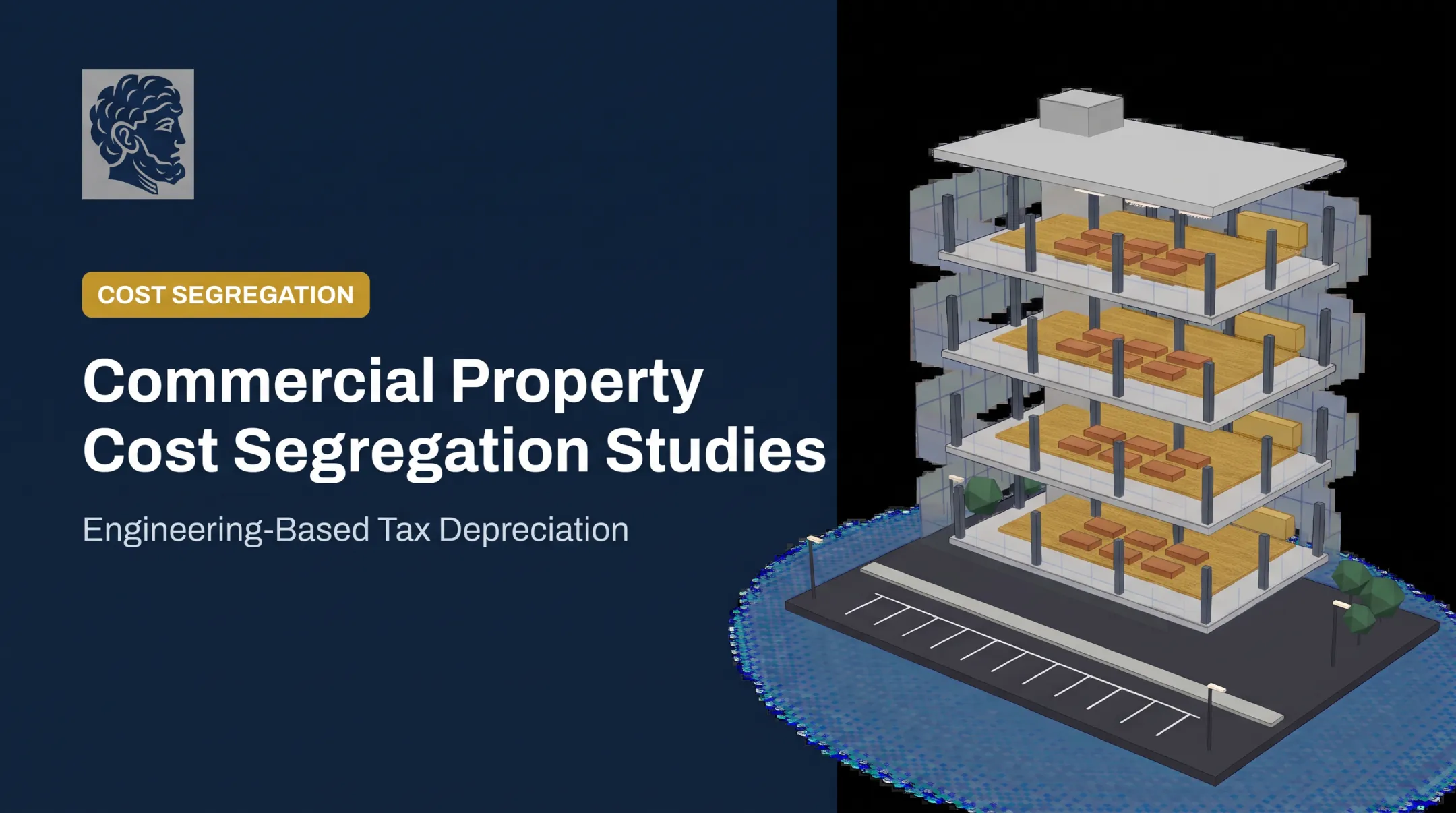
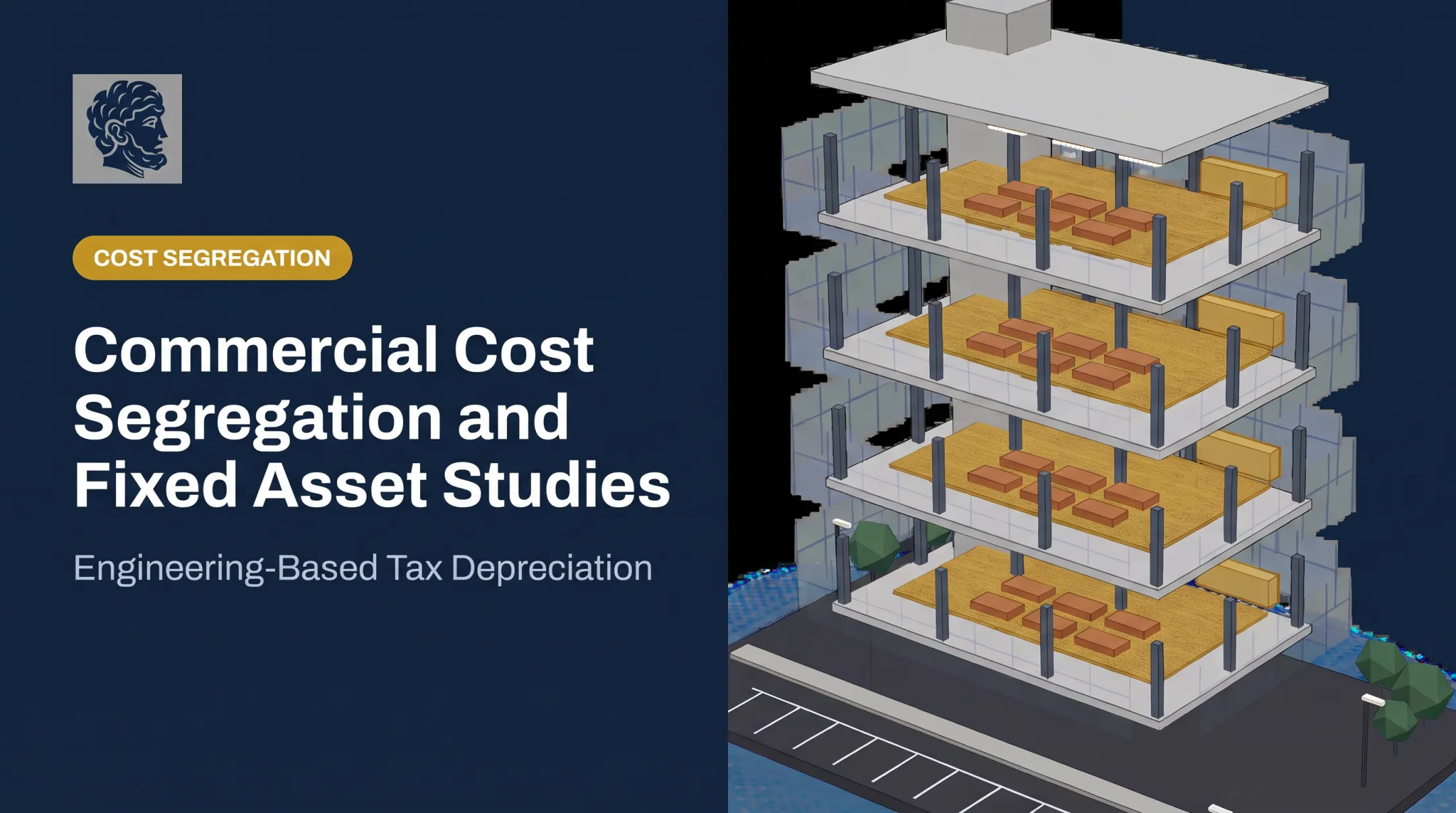
A cost segregation study is an engineering and tax analysis that splits a property into asset categories with different recovery periods. Nonresidential real property is generally depreciated straight-line over 39 years, per IRS Publication 946. A study identifies components that qualify for shorter lives.
How the Property Gets Divided
- Land: never depreciable
- Building structure: 39 years
- Personal property: 5 or 7 years, such as dedicated electrical and plumbing serving equipment, specialty flooring, cabinetry, and decorative finishes
- Land improvements: 15 years, including paving, sidewalks, fencing, site drainage, and landscaping
Classification depends on how a component functions. An electrical run serving a single piece of equipment may be short-life property. If other equipment can use it, it may belong to the building. Always confirm the rules for your placed-in-service date.
Because only depreciable assets can be reclassified, the $1 million test should apply to depreciable basis, not sticker price. A $1.2 million purchase where most of the value sits in land may offer little to reclassify. For a sense of scale, the IRS's own warehouse example splits a $5 million price into $1.88 million of land and $3.12 million of improvements and personal property.

Timing Benefit, Not a Bigger Total
Cost segregation doesn't create extra basis. Total depreciation over the property's life stays the same; the deductions simply come earlier. That can free cash for operations, debt paydown, or the next acquisition.
Bonus depreciation matters here. Under the 2025 legislation, qualified property acquired and placed in service after January 19, 2025 may qualify for permanent 100% first-year depreciation. The 39-year shell does not qualify, but a separately classified short-life component can, if it meets the acquisition and placed-in-service tests.
A written binding contract signed before January 20, 2025 changes the analysis. Section 179 has its own limits and doesn't let you expense the whole building.
Why $1 Million Is Relevant, Not Magic
Larger properties tend to have more depreciable basis, more complex systems, and a fee spread over a bigger opportunity. But a simple building with few reclassifiable components can still disappoint. So can an owner who can't use the deductions.
How Does a Cost Segregation Study Work for Commercial Properties Over $1M?
Gather the Records
Owners and CPAs should pull together:
- Closing statement and purchase-price allocation
- Construction contracts, pay applications, and invoices
- Architectural plans and renovation records
- Fixed-asset schedules and prior depreciation schedules
When records are thin, the provider inspects the property, photographs and measures components, and builds cost estimates priced from recognized sources. Either way, the provider reconciles those estimates to your total basis. A good report states plainly which costs are documented and which are estimated.
Engineering and Tax Classification
Engineers evaluate how each component functions, then classify it using IRS guidance, tax authorities, and case law. The IRS Cost Segregation Audit Techniques Guide sets out what examiners expect from a quality study. It lists 13 elements, including detailed methodology, engineering take-offs, legal analysis, and reconciliation to actual costs.
The guide says there is no single required format. It treats detailed engineering from actual cost records as the most accurate approach and views rule-of-thumb percentages with caution. A generic allocation, such as assigning a flat 40% of a manufacturing facility's cost to short-life property, is harder to defend.
A sound study also reconciles every classified dollar to the original basis and flags open assumptions for CPA review.
The Deliverable and the Tax Return
Expect a report with:
- Executive summary and methodology
- Asset classifications, recovery periods, and cost allocations
- Photographs or drawings where relevant
- Source documentation and depreciation schedules
Your CPA uses it for current-year depreciation, bonus elections, and Form 4562. For a property owned in prior years, an eligible look-back study may use Form 3115 to claim missed depreciation as a catch-up adjustment without amending prior returns.
Confirm current procedures, including Rev. Proc. 2025-23, with your CPA. Coordinate before filing, especially after an ownership change or when multiple entities are involved.
How Much Does a Cost Segregation Study Cost for Commercial Properties Over $1M?
No authoritative fee schedule exists for properties over $1 million, and a single universal price would mislead you. Fees depend on:
- Property size and number of buildings
- Asset complexity and construction or renovation history
- Quality of available records
- Inspection requirements and engineering depth
- Whether Form 3115 or tax implementation support is included
Pricing Models
Flat fees tied to square footage, property type, and scope are common among engineering firms. Percentage-of-savings pricing exists but is less common. Whatever the model, find out exactly what's included, such as audit support and deliverables, before comparing quotes.
Test the ROI First
- Calculate depreciable basis. Purchase price less land, plus improvements.
- Estimate reclassified basis. Apply realistic 5-, 7-, and 15-year allocations.
- Apply your tax rate to the accelerated deductions, limited by what you can actually use.
- Compare present value of those tax effects against the fee and administrative effort.
- Model recapture on a future sale.

Here's a hypothetical, not a promise. Take two $3 million buildings. In one, 30% of the price is land and a modest share of the building reclassifies. In the other, land is 10% and the building has heavy specialty systems.
The second may produce several times the accelerated deductions. If its owner is a passive investor with no other passive income, though, those deductions may sit suspended.
For perspective, an ASCSP case study of an industrial property reported about 25% of basis reclassified and a $15,000 fee. It's a single association-reported case, not an average. A deduction is also not the same as tax saved.
Seneca's Pre-Engagement Process
Seneca prepares an engineering-based commercial cost segregation estimate with projected ROI before you commit. A written fixed-fee proposal follows within 24 to 48 hours, so you can weigh fee against projected benefit before you engage.
What Weakens or Delays ROI
- Insufficient taxable income
- Passive activity loss limits
- An imminent sale
- Low depreciable basis after removing land
- Weak records or uncertain bonus eligibility
- A fee out of proportion to the benefit
Unused losses may carry forward under applicable rules, but a carryforward isn't the same as immediate cash savings.
Who Should Consider a Commercial Cost Segregation Study—and What Limits the Benefit?
Property Types Worth Screening
These property types all merit a first look:
- Offices, medical, and professional buildings
- Retail centers, restaurants, and mixed-use
- Warehouses and manufacturing facilities
- Hotels and self-storage
Reclassifiable components vary widely. Office value often sits in the build-out and site. Hotels carry FF&E and finishes. Self-storage has paving, gates, and security systems.
Recent acquisitions, new construction, and major renovations are natural candidates. Older properties may qualify for a look-back study if accounting-method requirements are met.
Can You Use the Deductions?
This question decides many studies. Review with your CPA:
- Taxable income and entity structure
- Passive activity rules, and whether you qualify as a real estate professional with material participation
- The $25,000 special allowance, which phases out between $100,000 and $150,000 of modified AGI
- The 2026 excess business loss threshold of $256,000 ($512,000 joint)
- State tax treatment
Cost segregation doesn't automatically offset wages or business income.
Exit plans matter too. A near-term seller should model recapture: Section 1245 gain is ordinary income up to depreciation allowed or allowable, and unrecaptured Section 1250 gain is capped at 25%.
Owners planning a long hold, a 1031 exchange, or an estate transfer may weigh timing differently. Get current legal and tax review rather than relying on rules of thumb.
Compliance Risk and Choosing a Provider
Aggressive classifications, unsupported allocations, improper land treatment, and generic reports invite scrutiny. The IRS accuracy-related penalty is generally 20% of the underpayment attributable to negligence or substantial understatement. It isn't automatic.

Checklist for choosing a provider:
- Engineering capability and documented experience
- Methodology aligned with the IRS audit guide
- Basis reconciliation
- CPA collaboration
- Written scope and fixed fee
- Form 3115 support when relevant
- NDA availability and secure document handling
- Audit defense
Seneca works directly with your CPA, signs off every study through its Head of Engineering, and includes lifetime audit defense covering IRS information requests and report corrections. That support cannot promise an audit won't happen or that a position will be accepted, but it does reduce the burden if questions arise.
Conclusion: Make the $1M Decision With an ROI-First Analysis
Properties over $1 million often merit a cost segregation screen. Whether a full study pays off depends on:
- Depreciable basis and property components
- Tax usability of the accelerated deductions
- Study fee and report quality
- Your exit strategy
Work through those factors with your CPA, then take these next steps:
- Gather closing statements, plans, invoices, and depreciation records.
- Ask your CPA to review whether you can use the deductions.
- Request a preliminary ROI estimate.
- Compare written fixed-fee proposals.
- Confirm the rules for your placed-in-service date.
Commercial owners and CPAs can request an engineering-led estimate and written proposal from Seneca before committing to a study. This article is general information, not tax advice. Consult your tax adviser for your situation.
Frequently Asked Questions
How much does a cost segregation study cost for commercial properties over $1M?
Fees vary with complexity, documentation, inspection needs, and report scope. Compare a written fixed-fee proposal with a preliminary ROI estimate rather than relying on a universal price.
How does a cost segregation study work for commercial properties over $1M?
The provider reviews documents, analyzes the property, classifies components, reconciles to basis, and prepares the report. Your CPA then implements it, using Form 3115 when applicable.
What is the depreciation year for commercial real estate?
Nonresidential real property generally uses 39-year straight-line depreciation. Eligible components may receive 5-, 7-, or 15-year periods; verify current IRS rules for your property.
Can you do a cost segregation study on a commercial property?
Generally yes. Ownership, depreciable basis, components, records, placed-in-service date, and your ability to use deductions determine whether it's worthwhile.
Is cost segregation worth it for commercial properties over $1M?
$1 million is a screening point, not a guarantee. Compare projected after-tax value to the fee, factoring in passive-loss limits, recapture, and holding period.
What items qualify for 100% bonus depreciation?
Eligibility depends on recovery period (20 years or less), acquisition and placed-in-service dates, and current law. Short-life components may qualify; land and the 39-year structure do not. Confirm with your CPA.