
Introduction
Most commercial buildings depreciate over 39 years. An engineering-based cost segregation study pulls out components that qualify for 5-, 7-, or 15-year lives, which moves deductions into the early years of ownership.
Nebraska owners and CPAs often struggle with the same four questions:
- Which costs qualify?
- How do federal and Nebraska rules interact?
- Is the study worth the fee?
- What paperwork is needed?
This guide covers eligible property, the study process, ROI, bonus depreciation, Form 3115 look-back studies, and how to vet a provider.
Key Takeaways
- A study changes the timing of depreciation; it does not erase tax.
- Eligibility turns on basis, components, use, ownership and tax position, not on Nebraska location.
- Federal bonus depreciation and Nebraska's separate 60% deduction must be checked together.
- Look for an engineering-based report your CPA can defend.
What Is Commercial Cost Segregation in Nebraska?
How Cost Segregation Changes Depreciation
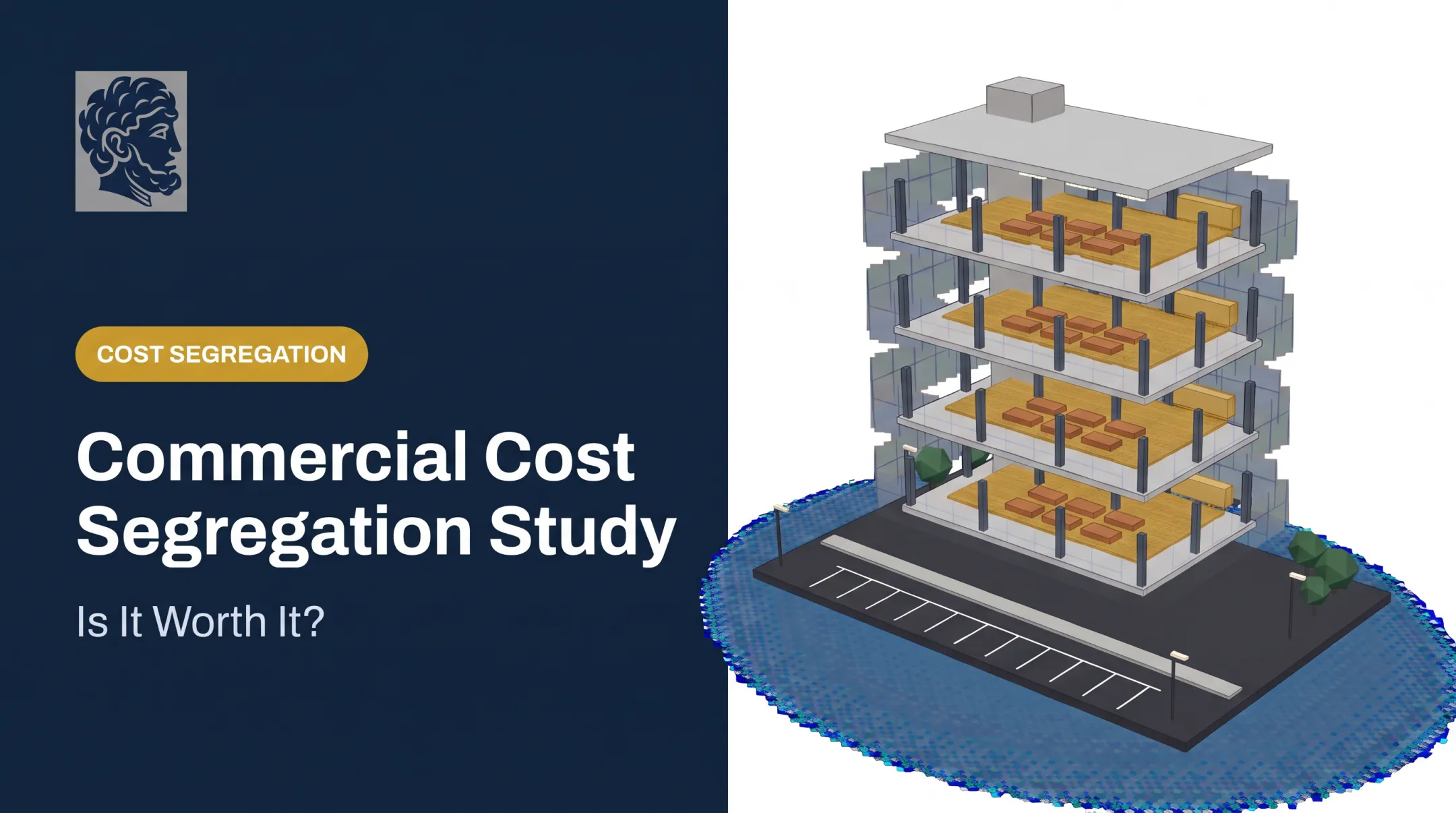
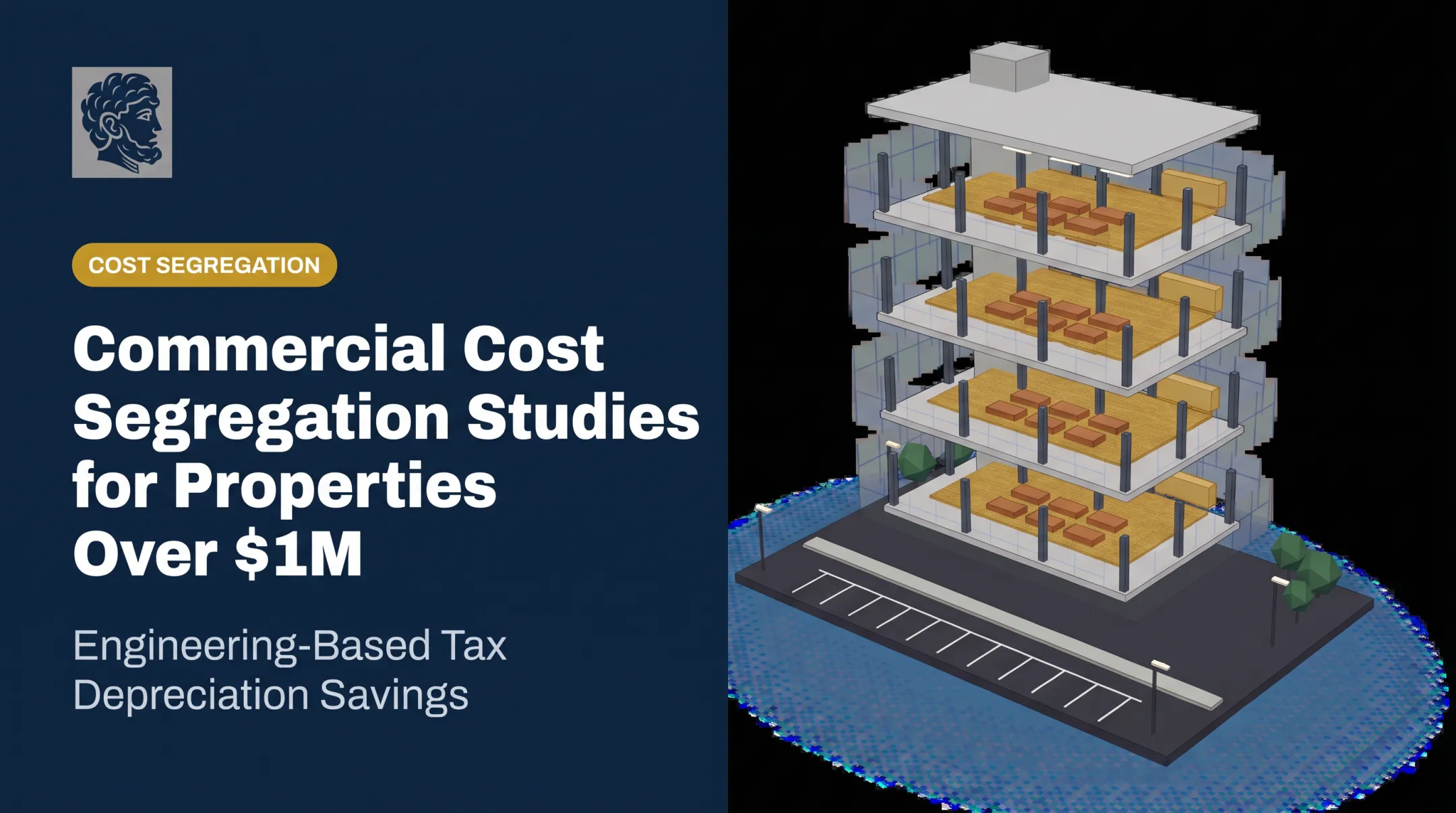
Cost segregation is the engineering and tax analysis that sorts a property's cost into classes with different IRS recovery periods. The IRS Audit Techniques Guide describes it as classifying assets and substantiating their cost basis.
Typical classes:
- 5-year: carpet, millwork, decorative lighting, data and security cabling, electrical and plumbing serving equipment
- 7-year: furniture, office equipment, process-related items
- 15-year: paving, sidewalks, fencing, landscaping, drainage, site lighting
- 39-year: shell, structure, general building systems
- Not depreciable: land
Verify current classifications in IRS Publication 946. The guide itself is not binding law and offers no bright-line test between Section 1245 and 1250 property.
Why the Strategy Can Improve Cash Flow
Total deductions over the property's life stay the same. Earlier deductions can lower taxable income in the first years and free up cash.
For example, a $2,000,000 depreciable basis with 25% reclassified to shorter lives moves $500,000 out of the 39-year bucket. Whether that helps depends on the owner's tax rate, taxable income, and passive activity limits.

Under IRS Publication 925, rental activity is generally passive, so a real estate professional or other passive income may be needed to use the losses.
Who Typically Evaluates a Study
Property owners, real estate entities, developers, investors, and CPAs typically decide whether a study is worth pursuing. The CPA should weigh the study against the full federal and Nebraska tax position. Seneca's commercial work covers properties generally from $450K.
Which Nebraska Commercial Properties and Components May Qualify?
Commercial Property Types to Review
Opportunity varies with construction type, renovation history, specialty systems and tenant improvements. Candidates include:
- Office, retail and restaurants
- Industrial, warehouse and flex
- Manufacturing and production
- Medical and care facilities
- Hospitality and mixed-use
Income-producing agricultural buildings also come up in Nebraska. Under IRS Publication 225, recovery periods include:
- Single-purpose livestock structures and commercial greenhouses: 10 years
- Grain bins and agricultural fences: 7 years
- General farm buildings: 20 years
Unusual components need a fact-specific review.
Common Components Identified in a Study
Engineers typically identify shorter-life items such as:
- Specialty electrical and dedicated plumbing
- Process HVAC, interior finishes and fixtures
- Removable assets
The IRS Audit Techniques Guide (ATG) treats HVAC as separate only when it solely serves a process.
Land improvements often reclassified include paving, parking, fencing, landscaping, drainage, exterior lighting and site utilities. General grading and excavation for land development stay in non-depreciable land.
Costs That May Remain on Longer Recovery Periods
Foundations, footings, load-bearing walls, framing and general building HVAC and electrical usually stay in the 39-year basis. Personal-use portions, unsupported estimates, duplicated costs and assets already depreciated under another method need careful review, not automatic inclusion.
How Nebraska Tax Rules and 2026 Bonus Depreciation Affect the Analysis
Nebraska Conformity and State Filing Treatment
Nebraska is a rolling-conformity state. Individuals start from federal AGI, and corporations from federal taxable income.
Older Department of Revenue guidance says no addback of federal bonus depreciation for tax years beginning in 2006 and later, but that legacy guidance does not settle the 2026 calculation on its own.
Nebraska Revised Statute 77-27,242 adds a separate deduction of 60% of the cost of qualified property. Key points from the statute and the DOR's draft 2026 Form 27242:
- The deduction applies only to cost not already deducted federally
- Property whose federal deduction is 60% or more of cost is excluded
- Where claimed, the federal amount is added back in later years
- Pass-through deductions flow to owners in proportion to their shares

The statute and the DOR materials give different start years (2025 versus 2026), so confirm treatment for your return year. Seneca does not prepare state returns or state adjustments; that stays with your CPA.
2026 Bonus Depreciation Considerations
The 2025 federal law made 100% bonus depreciation permanent for qualifying property acquired after January 19, 2025. Property under a written binding contract before that date is generally treated as acquired earlier, per IRS Notice 2026-11.
Reclassified 5-, 7- and 15-year property can qualify, while 39-year structure cannot.
Some older guidance still describes a 2026 phase-down to 20%. The law now in effect replaced that schedule, so work from current IRS guidance.
For tax years beginning in 2026, the Section 179 limit is $2,560,000, phasing out above $4,090,000 of qualifying property.
A study supports eligible categories; it does not guarantee bonus treatment. Your CPA applies elections, limits and filing rules, including whether to elect out where bonus would create unusable losses.
Nebraska-Specific Planning Questions
Before relying on first-year deductions, model:
- Tax basis and income levels
- Passive activity limits
- Prior depreciation
- Ownership changes
- A planned sale or exchange
On sale, Section 1245 property is recaptured as ordinary income up to depreciation allowed. Acceleration is only a timing benefit, and recapture comes due when you exit.
How a Nebraska Commercial Cost Segregation Study Works
A Nebraska commercial cost segregation study moves from feasibility and document review through engineering classification, then into your CPA’s depreciation schedule.
Initial Feasibility Review and ROI Projection
A provider should ask for:
- Property type, cost and land allocation
- Acquisition and placed-in-service dates
- Renovation costs and existing depreciation schedule
- Ownership structure and expected tax position
The estimate should weigh projected incremental deductions against the fee, holding period, recapture and your ability to use the deductions.
Engineering Review and Documentation
Typical documents include:
- Closing statements, construction contracts and invoices
- Plans, appraisals and photos
- Fixed-asset schedules and depreciation records
For tenant improvements, leases show who owns what. Review is done by onsite inspection or virtual tour, depending on size, complexity and records.
Asset Classification and Final Report
Engineers then:
- Identify assets and allocate costs using quantity take-offs
- Assign recovery periods and reconcile the total to actual cost basis
- Allocate indirect costs and group similar assets for the fixed-asset schedule
The rationale goes in a report built to withstand review.
CPA Handoff and Look-Back Studies
The report feeds the CPA’s depreciation schedule. For property already placed in service, Form 3115 can claim missed depreciation in the current year through a Section 481(a) adjustment, without amending prior returns.
Under Rev. Proc. 2025-23 the automatic change number is 7. A negative adjustment is generally taken in one year, a positive one over four. Confirm current procedures with your CPA.
Choosing a Provider and Understanding the Fee
The IRS sets no preparer qualifications, but says an engineer's study is generally more reliable. It also notes that contingency fees can create incentives toward aggressive positions. Check for:
- Engineering expertise and comparable property experience
- Methodology that follows the IRS ATG
- Collaboration with your CPA
- Written fixed-fee pricing and a clear scope
- Audit support, including whether it lasts for life
- Secure data handling and NDAs
Seneca offers an engineering-led ROI evaluation before you commit, plus a written fixed-fee proposal within 24 to 48 hours. Engineering works with your CPA, studies typically take 2 to 5 weeks, and lifetime audit defense is included. Projected savings are estimates, never guarantees.
Conclusion: Deciding Whether to Evaluate Nebraska Commercial Cost Segregation
The strongest candidates share a few traits:
- Meaningful depreciable basis
- Identifiable short-life components
- Enough taxable income, or a plan to use the deductions
- A holding period that supports the timing benefit
Next steps:
- Gather closing statements, plans, and depreciation schedules
- Ask your CPA to review your tax position
- Get a written ROI projection and fixed-fee proposal before you commit
- Request a no-cost preliminary estimate from Seneca, which serves clients in all 50 states
Frequently Asked Questions
How much does a cost segregation study cost in Nebraska?
Price varies with property size, basis, complexity, records and inspection needs. Compare a written fixed-fee proposal with the projected tax benefit rather than relying on a statewide range.
How does a cost segregation study work for commercial property in Nebraska?
Engineers review documents, tour the property, classify components and prepare a report. Your CPA then applies current federal and Nebraska rules.
Who can perform a cost segregation study in Nebraska?
Choose an engineering-led provider with a defensible methodology and audit support. Your CPA remains responsible for return treatment and filing decisions.
What qualifies for cost segregation in Nebraska?
Commercial buildings, tenant improvements, specialty systems, equipment and site improvements are common candidates. Land and most structural components stay on longer lives.
How will the 2026 bonus depreciation rules affect cost segregation in Nebraska?
Verify federal eligibility dates, elections and limits, plus Nebraska's separate 60% deduction, with IRS and Nebraska Department of Revenue guidance and your CPA before projecting savings.
Can you do cost segregation on commercial property in Nebraska?
Yes. A qualified provider can evaluate Nebraska properties through a virtual or onsite tour. Seneca serves all 50 states and coordinates final tax treatment with your CPA.