
- Home
- Property Types
- Industrial & Flex
Cost Segregation for Industrial & Flex Property
Industrial property is site-work heavy. A distribution building sits on a large, heavily engineered site, and the paving, yard lighting, fencing and drainage around it are land improvements, not building. Inside, dock equipment and dedicated equipment power are separate assets from the shell.
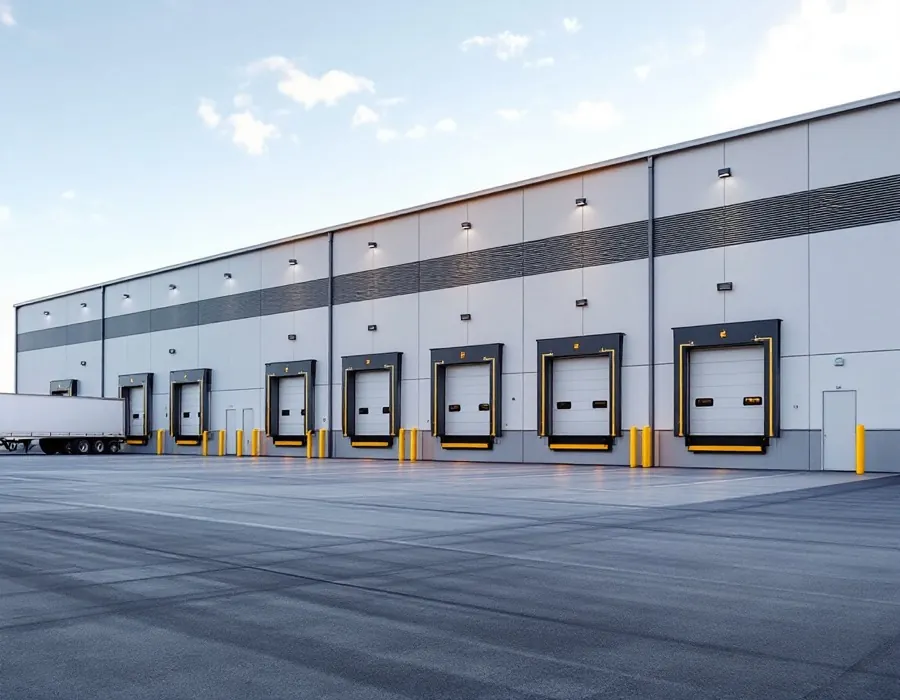
Where the value is in industrial and flex property
- Warehouses
- Flex space
- Industrial facilities
The truck court is a 15-year asset
Heavy-duty paving designed for loaded trailers, trailer storage, drive aisles, yard lighting, perimeter fencing and gates, retention ponds and site utilities are land improvements, generally 15-year property.
Dock equipment is personal property
Levelers, seals and shelters, bumpers, vehicle restraints, dock lights and the dedicated power serving them are generally 5-year assets, separate from the building shell.
Flex space carries two populations
Flex buildings combine warehouse bays with finished office and showroom areas. The office side brings finishes, cabling and decorative lighting; the warehouse side brings dock equipment and dedicated equipment power. A study treats each on its own terms.
Commonly reclassified components
Representative of what an engineered study identifies in this asset class. Actual components and recovery periods depend on the property and are documented individually in your report.
What would a study find on your property?
Send the property details. Engineering prepares the estimate, and you receive a written, fixed-fee proposal within 24 to 48 hours.
Industrial and Flex cost segregation questions
Still have a question? Ask Engineering.
Why does site work matter so much on a warehouse?
A distribution building is a relatively inexpensive shell on an expensive, heavily engineered site. Paving built for loaded tractor-trailers costs far more than standard car parking, and it is a land improvement, generally 15-year property.
Is ESFR fire protection personal property?
Generally no. Building-wide fire suppression is a structural component. Where suppression is engineered specifically to protect a process or a specific racking configuration rather than the building, there can be a supportable argument, and we document the distinction rather than assume it.
We built for a single tenant on a build-to-suit. Does that change anything?
It usually helps. Build-to-suit projects have detailed drawings, a clean schedule of values and identifiable tenant-driven scope, which makes a new construction study both more precise and more defensible.
Get a Commercial Savings Estimate
Fixed-fee proposal in 24 to 48 hours.
- Prepared by Engineering
- Lifetime audit defense
- NDAs available
Request your estimate
Estimates are prepared by our Engineering team.
Request received
Engineering will review the property and send your written estimate and proposal within 24 to 48 hours.
Preview site: this form is not yet connected, so nothing was sent.