
- Home
- Property Types
- Retail & Restaurants
Cost Segregation for Retail Centers & Restaurants
Retail is the classic land-improvement asset class. Parking fields, pylon signage, site lighting and sidewalks surround every center, and restaurants add kitchen connections, drive-thru lanes and decorative finishes that do not belong in a 39-year life.
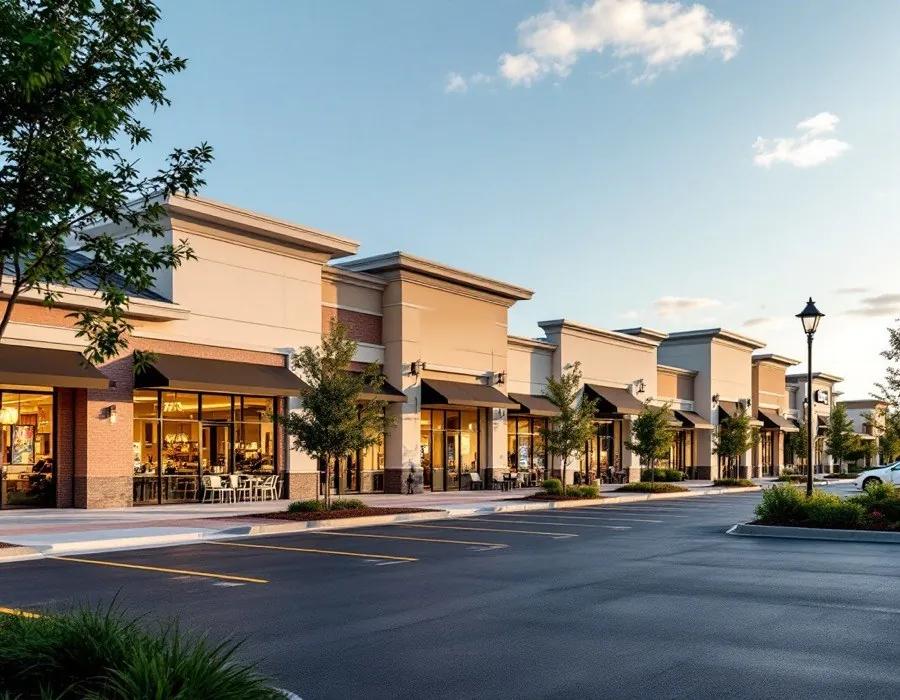
Where the value is in retail and restaurants
Retail centers are among the asset types where our engineering team has deep experience.
- Retail buildings
- Shopping centers
- Fast food restaurants
- Dine-in restaurants
Parking is the largest short-life item
Retail parking ratios are high by design. Paving, striping, curb and gutter, sidewalks, wheel stops, cart corrals and site drainage are land improvements, generally 15-year property.
Signage and site lighting add up
Pylon and monument signs, their foundations and dedicated electrical service, plus pole-mounted parking lot lighting, are short-life assets on almost every retail site.
Restaurants are equipment-dense
Kitchen equipment connections, exhaust hoods, walk-in coolers, dining furniture, decorative lighting and finishes are generally 5-year property. Fast food sites add drive-thru lanes and order-point site work as 15-year land improvements.
Commonly reclassified components
Representative of what an engineered study identifies in this asset class. Actual components and recovery periods depend on the property and are documented individually in your report.
What would a study find on your property?
Send the property details. Engineering prepares the estimate, and you receive a written, fixed-fee proposal within 24 to 48 hours.
Retail and Restaurants cost segregation questions
Still have a question? Ask Engineering.
Does a single-tenant net-lease building justify a study?
Often, if the basis is meaningful. Single-tenant pads are small buildings on generous sites, so land improvements are a large part of the basis. The engineering-prepared estimate shows what a study would find before you commit.
Who gets the deduction on a triple-net lease?
The owner depreciates what the owner paid for and owns. If the tenant funds and owns its own build-out, that is the tenant's asset. The study covers the landlord's basis, including any landlord-funded improvements.
Is a restaurant renovation qualified improvement property?
Interior, non-structural improvements placed in service after the building itself generally are QIP, which is 15-year and bonus eligible. Kitchen equipment and its dedicated connections are usually personal property rather than QIP, and enlargements and structural work are excluded.
We are re-tenanting a vacant box. Is that a study or a repair?
Both questions matter. We identify what is qualified improvement property and what is 5-year personal property, and we pair the work with a partial asset disposition for the build-out you are tearing out.
Get a Commercial Savings Estimate
Fixed-fee proposal in 24 to 48 hours.
- Prepared by Engineering
- Lifetime audit defense
- NDAs available
Request your estimate
Estimates are prepared by our Engineering team.
Request received
Engineering will review the property and send your written estimate and proposal within 24 to 48 hours.
Preview site: this form is not yet connected, so nothing was sent.